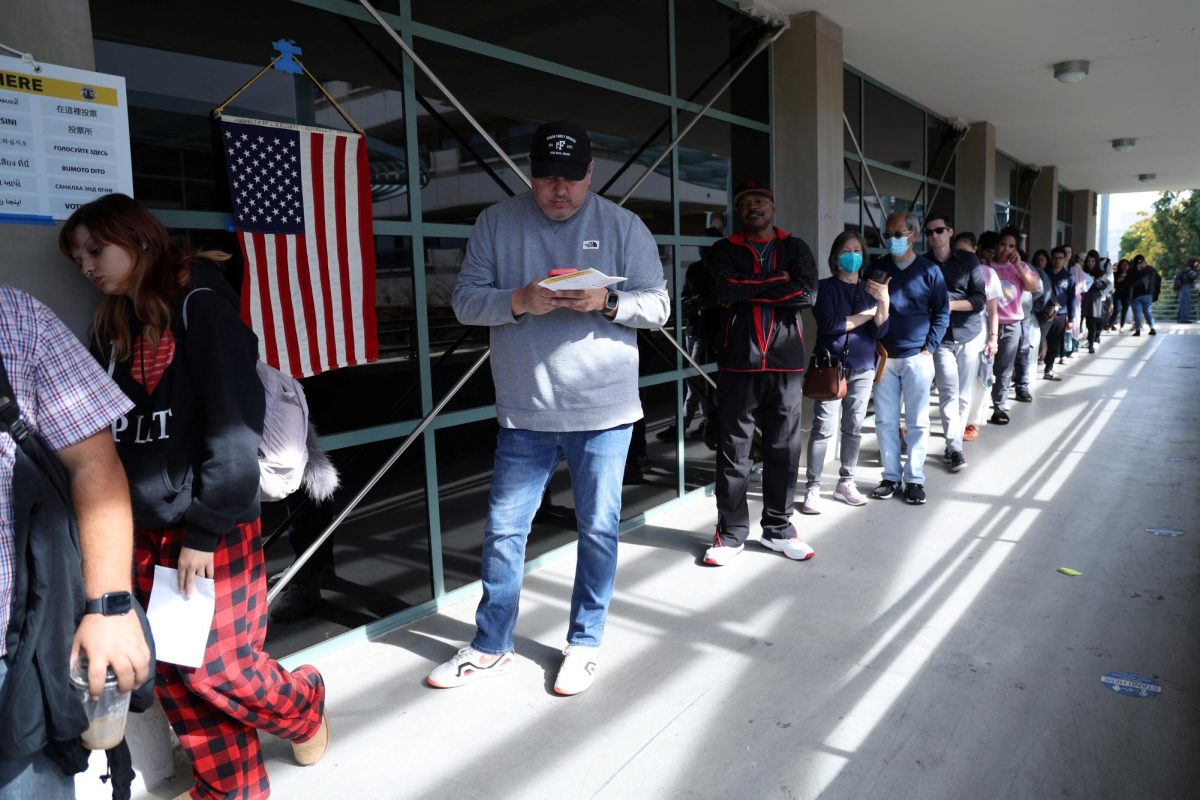
After the heat of the 2024 election, the afflictive truth about our democracy became transparent: young Americans are no longer passive overseers of elections, but now shape a majority of the votes. For instance, in the 2024 presidential election, over 48% of voters were among Generation Z (born 1997–2012) and Millennials (born 1981–1996). By 2028, the majority of Generation Z will be eligible to vote and with the tension between political parties, the call to the polls becomes more than a civic duty and instead a necessity for democratic preservation.
These young voters are finding that living the promised American Dream depends on our participation in democracy. Topping the list of issues most important to Gen Z and Millennials are: college tuition, gun violence, reproductive rights, climate change, and the general cost of living.
Bachman, as a millennial, expresses that voting is a right given to those citizens at the age of 18 and that those privileges should be used to attain the policies in which they see benefit the country. The reality is harsh but simple: the more young people ignore our right to vote, the more our futures are put into the hands of someone who may not even be alive to face the consequences.
Despite the fact that the youth voting turnout is growing, the gap between the political priorities of many candidates still widens. Many politicians praise “youth empowerment” leading up to election day, but when January rolls around, most fail to craft legislation that reflects the ideals that would drive more young voters to the polls. A recent study done by Data for Progress indicates that around 70% of voters between the ages of 18 to 29 years feel that their generation is underrepresented in Congress. This disconnect between the adolescent population and their electoral ballots raises a core question: if young voters make up almost half the votes, why are they still less prioritized?
A clean-cut answer would be the absence of a bridge with distinctive generations– an ideological distance forged through the different conditions each group grew up in. Those born before the 1980s entered adulthood with attainable goals: college was affordable, housing markets were below millions, and political institutions were projected as stable. Meanwhile, young voters inherited a more brutal reality with soaring tuition, a polarized legislature, and a federal minimum wage that has stayed the same since 2010. According to the U. S. Department of Labor, the minimum wage of the average American has remained at $7.35 while the average cost of living has surged to an 8% inflation rate in 2022.
These circumstances naturally fostered different political values; however, they should not be labeled as incompatible. Burbank Mayor Nikki Perez, a Millennial sworn in at the age of 30 and the city’s youngest mayor, notes that young voters have already sprouted a change in electoral outcomes, such as local propositions, mayoral races, and even her own campaign. “From the potholes on the street to your insurance payments, everything is touched by politics, and the sooner young Americans realize this connection, the sooner they will be equipped to create informed decisions and select elected officials who protect their wellbeing and quality of life,” Mayor Nikki Perez said.
This same reasoning is why representation becomes more than symbolic; it becomes structural. Through her experience, she mentions that the driving factor for youth voters is not to decide uniformly, but to create a future in which they see themselves living.
While age may not prevent someone from leading efficiently, the disconnect caused by the perspectives can. The blind spot caused by the absence of perspective that most generations experience can raise concerns about who is running our government. By highlighting this gap, it doesn’t just disregard the older population of America, but instead underscores the importance of dual outlooks.
As tension between voters increases, it is important to note the recognition necessary for preserving representation. Politics is no longer a mere civic formality; it is the framework that determines our future.
Emphasized by Mayor Perez: “Even if someone is not interested in politics, they are affected by politics every day.”