
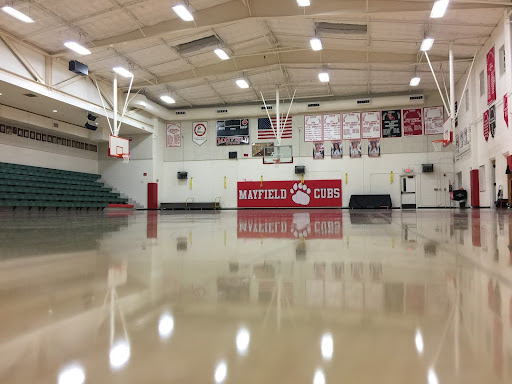
For most of my life, basketball has been more than a sport. It has been part of my identity, my outlet, and my dream. Like many student-athletes, I dreamed of earning a scholarship or competing at the collegiate level, believing that years of discipline and sacrifice would eventually pay off. As a senior, I expected my final season to reflect that journey. Instead, it became a lesson in how eligibility rules for transferring players can effectively bench athletes, stripping away seasons, opportunities, and moments that can never be replaced.
Due to California Interscholastic Federation (CIF) transfer rules, policies that date back decades and were originally designed to prevent athletic recruiting and “school shopping”, many transferred athletes face delayed eligibility. CIF’s formalized transfer rules emerged in the mid-1990s due to concerns about the rise of all-star teams through recruitment. While immediate eligibility is possible in limited cases, most transfers still require sit-out periods unless they meet strict residency or hardship criteria. The rules have evolved unevenly, prioritizing regulation over student-athletes’ individual circumstances.
I was ruled ineligible to compete at the varsity level because I was a double transfer. An appeal was sent and it was ultimately denied. My transfer was personal because my mom became ill. Which is obviously not based on athletic advantage or recruiting. Yet the consequence was overwhelming. I lost the opportunity to play varsity basketball during my senior year, a season that for any athlete is irreplaceable.
I remember the exact day and time I found out. It was just a week after earning a spot on the varsity team, a week of being so excited and believing that this would be my year. It took me an entire week, and even Thanksgiving break, to fully wrap my head around what I was being told. My only option was to play junior varsity. I was in disbelief.
How could all my years of hard work, time, commitment, and experience, not to mention the money my parents spent, suddenly define me to be a JV player? Personally, I find nothing wrong with JV.
I was so excited for senior night and for the chance to play alongside my old teammates, new friends, and my childhood friend. In what felt like an instant, all of that was taken away.
I am not alone.
Across California, student-athletes who transfer schools for non-athletic reasons such as family moves, financial hardship, safety concerns, or academic and mental health needs are being impacted by CIF transfer policies that claim to ensure fairness. Under CIF bylaws, students who transfer without a valid change of residence often face sit-out periods, limited competition, or varsity ineligibility. In cases of multiple transfers, penalties are typically stricter, regardless of intent.
This raises an important question. If the purpose of these rules is to prevent recruiting and unfair advantages, why are athletes who transfer for personal and necessary reasons treated the same as those who transfer solely for athletics?
While CIF rules aim to maintain competitive balance, their “one size fits all” enforcement ignores context. In my case, and in the cases of the athletes I interviewed, the rules did not value why we transferred. They only punished the act of transferring itself. As a result, student-athletes lose more than games. They lose opportunities that cannot be replaced. That loss is not just about playing time.
One transferred athlete explained how eligibility restrictions made it harder to connect with a new team. Tiki Hollingsworth, a senior at Mayfield who transferred during her sophomore year, said being forced to wait to compete made it difficult to feel fully part of her new team.
Games, she explained, are where athletes learn how teammates respond under pressure and build real chemistry.
Hollingsworth transferred for personal reasons related to her mental health, yet felt those circumstances were not reflected in CIF’s decision. “I definitely don’t feel like CIF even knew about the reason for my decision,” she said.
Missing varsity competition means missing development, team chemistry, and exposure to college recruiters. For juniors and seniors especially, the timing is critical.
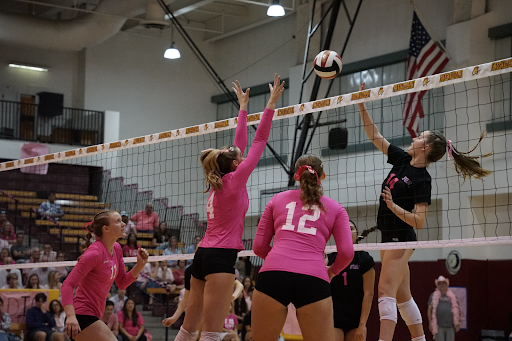
Even after regaining eligibility, the pressure does not disappear. Hollingsworth explained that sitting out part of the season made returning to competition feel heavier. “You don’t want to make any mistakes,” she said. “You don’t want to be the reason your team starts losing.” She also noted that transferred athletes are often overlooked for league awards and opportunities simply because they were not eligible long enough.
Like many transfers, the rules did not just limit when she could play, but how she experienced the season as a whole.
For all of us, the impact went beyond the court. The mental toll of being ruled ineligible is rarely acknowledged by CIF. Bilu said the sit-out period affected her season significantly.
Madison Williams, sophomore at Arcadia High School agrees with the sit-out policy, but believes “there are also circumstances where it’s way too long”. “My first game is today (1/7/2026), my sit out period ended on the 27th.”, Williams added.
When I was told I could not play varsity, I began questioning my abilities and how others would perceive me if I played junior varsity instead. Those doubts followed me for weeks. I felt trapped, pushed into a corner with all the thoughts and perceptions people might have about me knowing I was on JV. I did not even tell my closest friends or my uncle, who has been one of my biggest supporters at games. To this day, my friends still do not know.
All of this has not just affected my opportunities, it has affected me emotionally. Those thoughts consumed me. And if I am being completely honest, they caused me to degrade myself. I felt horrible. I felt like a loser. I started to wonder if maybe I really did just suck.
Why should athletes who transfer for mental health, family stability, safety or whatever they are going through have to be the one who pays the price?
When I thought I had lost all hope, I remembered the conversations I had with my former coach, Amber Gravely, along with Erika Mastrobuono, my counselor, and Amy Lareau, my college counselor. They reminded me that I am not defined by a rule, and certainly not by an eligibility decision. They reassured me that whatever choice I ultimately made was meant to be, and they helped guide me through deciding whether to stay and how to look into playing on a club team.
Eventually, I chose to play JV, not because it reflected my skill, but because my love for basketball outweighed the pain. Still, no athlete should have to justify their passion or feel diminished because of a policy that refuses to consider intent.
Concerns about CIF transfer rules extend beyond individual cases. The A-B-A transfer rule, outlined in CIF policy, allows immediate eligibility if an athlete transfers back to a previous school without competing. These decisions are designed by a transfer eligibility handbook that spans nearly 20 pages, not including two additional handbooks provided to parents. Yet despite this extensive framework, the outcomes often feel inconsistent, especially when athletes lose entire seasons for circumstances outside their control.
If the rules are truly equal, why do their consequences look so different?
High profile athletes often navigate these same rules very differently. Bryce James, son of NBA’s all-time leading scorer LeBron James, has transferred schools multiple times during his high school career, yet his exposure, development, and future opportunities have remained largely intact. His name, resources, and platform ensure visibility regardless of eligibility restrictions. For athletes like us, without national attention or professional connections, a single denied appeal can erase an entire season and years of opportunity. The rule may be the same on paper, but its impact is not.
This is not about blaming individual athletes. It is about questioning a system that produces unequal results while claiming fairness. CIF oversees thousands of student-athletes across California, yet its policies often fail to consider grade level, division, exposure, and personal circumstances.
A senior losing varsity eligibility is not losing a privilege. They are losing moments that define high school memories. Senior night. Playoffs. The incredible bond you build with your team. Everything.
I know what I am capable of, and I felt robbed of my senior season. I wanted to play in a more competitive environment that challenges me and pushes me to grow. Being placed at a lower level made me feel too comfortable, like I was playing more for fun than for growth, even while still giving my best effort. That is essentially what I’m experiencing right now.
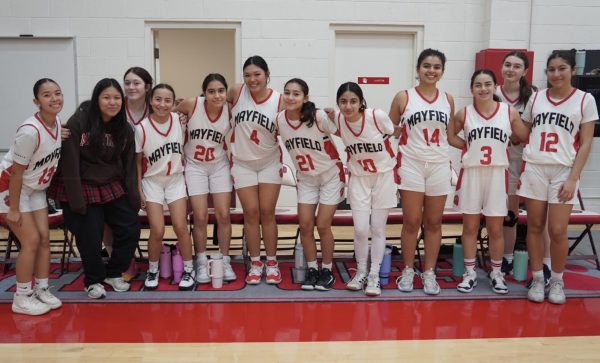
Unexpectedly, junior varsity became my family. These loud, sweet, energetic and humorous girls, along with my coaches new and old, welcomed me immediately. They not only showed me love, but comforted and showed me compassion.They make me laugh, smile and keep my heart full every single day. Even though it was not the path I planned, they became my light and motivation to push through it all and give it my all. Which reminds me why I fell in love with basketball in the first place.
I am writing this article not to change my own situation, but to advocate for student-athletes who will face these rules in the future. No athlete should feel alone, confused, or punished for circumstances out of their control.
CIF has the opportunity to reform its transfer policies by considering intent, individual circumstances, and the unique impact on seniors. Fairness should not mean sameness. It should mean understanding.
High school athletics are meant to build opportunity, not to be taken away. So, are CIF transfer rules really maintaining fairness, or are they costing the futures student-athletes worked so hard to earn?