
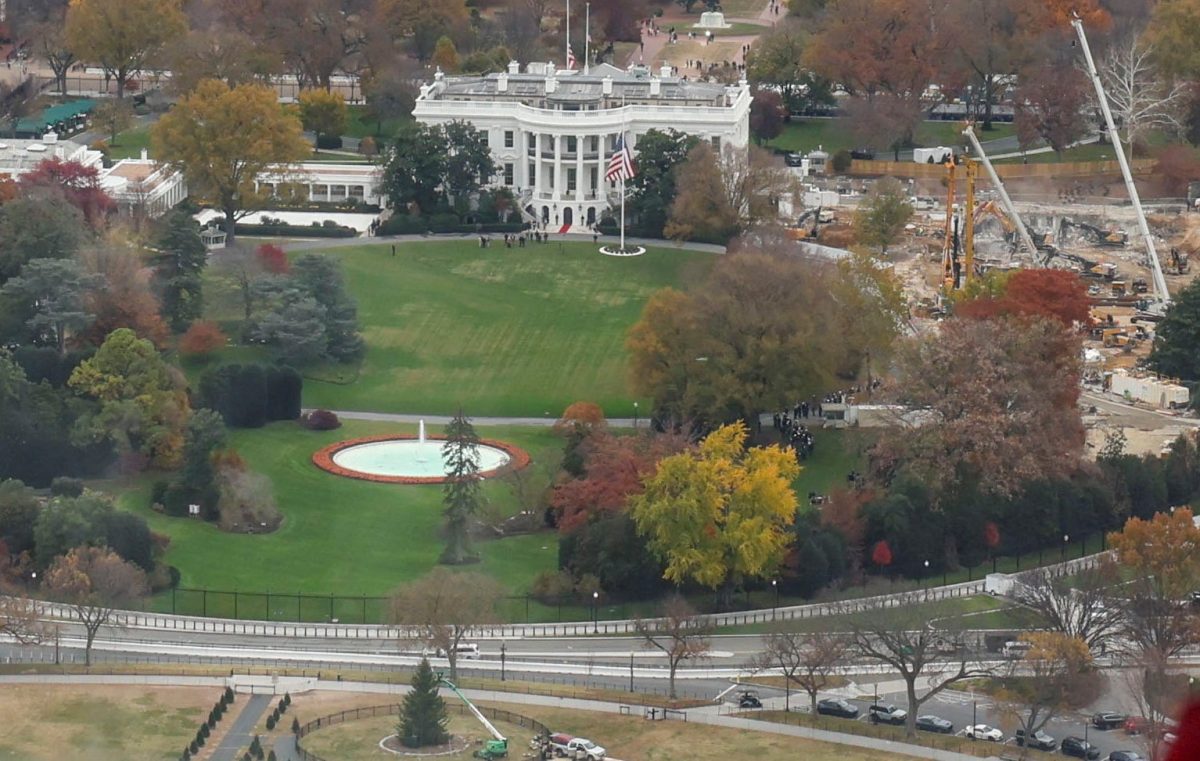
When considering the icons of the “Americana” idea in the U.S. a few major landmarks may come to mind, perhaps The Statue of Liberty in New York or Mount Rushmore. On the back of the $20 bill is a symbol of the executive branch, the powerhouse of America: the White House . Dating back to 1792, the property on Avenue has had 13 renovations since 1902, one of them being the 1942 expansion of the East Wing under Roosevelt’s presidency. The addition offered more offices for employees, in addition to housing the Presidential Emergency Operations Center – a secret fortified shelter in its underground.
On October 23rd, 2025, the demolition of Roosevelt’s East Wing was completed to make room for President Trump’s addition of a 90,000 square foot ballroom.
A couple weeks before, President Trump hosted a dinner in the East Room for the donors who contributed to the $300 million project. When addressing attendees, Trump claimed that “for 150 years they’ve wanted a ballroom.”
The new ballroom is said to have an occupancy of 999 people, the president in his address specifically saying the ballroom will be used for international visits with foreign diplomats.
The President also cited the pushback that Roosevelt received back during the mid-war construction of the East Wing back in the 40s, and argued for a thriving stock market amid the construction of the Ballroom.
Trump’s remarks took place despite the on-going government shutdown that left 41 million people without a budget for food from their SNAP (Supplemental Nutrition Assistance Program) benefits. Much attention was drawn to the program amid its suspension during the shutdown. The 12-month budget for SNAP in 2024 totalled at 99.8 billion dollars, roughly 8.3 billion a month. This poses a question: with all those donations towards a ballroom benefitting up to 999 people, where could that money be spent elsewhere?
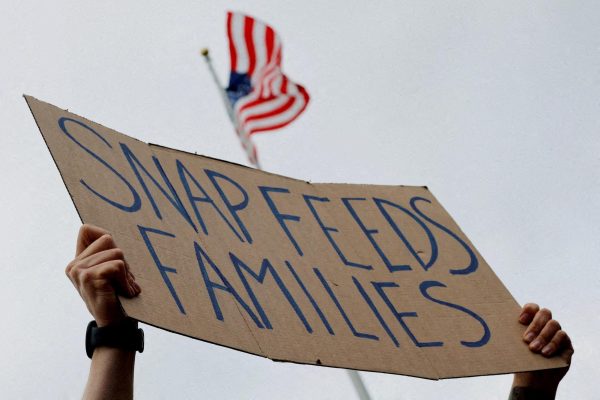
With the average recipient of SNAP benefits totalling at a few dollars short of two-hundred monthly, the price tag of the new ballroom could feed just over 1.6 million people for a month. That means that roughly the population of Philadelphia, Pennsylvania, worth of people who depend on the monthly nutrition benefits could be supported.
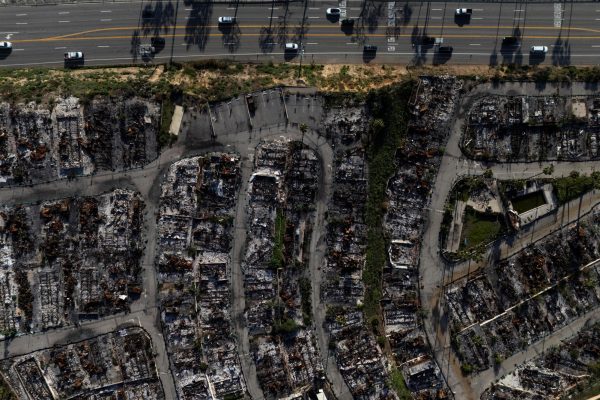
Taking into account the fires in Los Angeles that struck the Palisades in January of 2025, in the Eaton fire alone, 6,000 homes were taken amidst the flames. It is estimated that it will cost roughly a million dollars to rebuild an average sized home (about 2,000 square feet) in the burn scar region. With some simple math, 300 family homes could be rebuilt with the funding spent on the ballroom, providing housing to an estimated 1,200 people (assuming four residents per home) impacted by the fires, that’s an easy 5% of homes lost that could be restored in the Altadena burn scar.
LA County also faces issues in the homeless crisis, with about 72,000 people of the population in poverty with no place to live. Tiny Homes are a viable option to help in these efforts, and cost some $42,344 per bed to build. The ballroom’s price tag could provide a home for about 7,100 people, or 10% of the county’s total unhoused population.
One major financial stress on families across tax brackets is sending kids to college. In a 2024 report on higher education, Ellucian reported that their sample of students had a 59% majority that said financial factors influenced their consideration of quitting higher education. An in-state UC tuition runs about $45,000 per year, reaching about $180,000 for a four-year degree. The ballroom funding could send 1,823 California students to a UC school for four years with boarding.
Just these statistics prove that those millions of dollars are going to support an invitation-only facility, when 300 million dollars could go a long way in an abundance of other situations to helping many more people across the United States.