Every year, eight winter nights are lit up by the Jewish tradition of Hanukkah, celebrating the rededication of the temple in Jerusalem. The story dates back more than 2,000 years, when a group of Jewish fighters called the Maccabees defeated a Greek army in a war. Tragically, the temple was desecrated and left in disrepair. When the Maccabees returned to the temple, they discovered only a small drum of oil within the ruins. A tradition kept by the temple was keeping the ner tamid (“eternal light”) burning on the menorah; however, they estimated that the oil would last only one night. After lighting the oil, the ner tamid surprisingly remained for eight days, allowing for more oil to be gathered. This was seen as a miracle, deepening the connection of the Jewish people to God and the conquering of light over darkness.
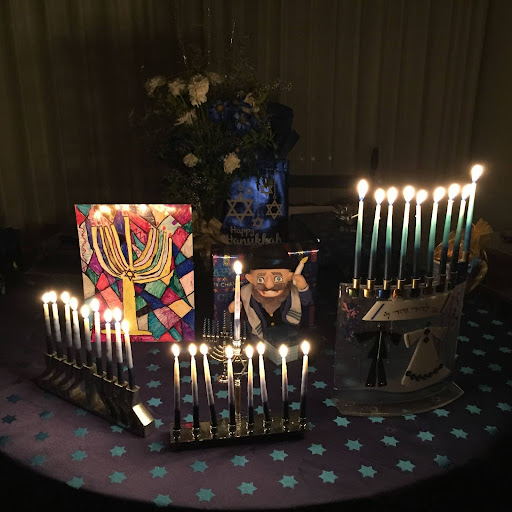
Jews are reminded of this miraculous occasion when they participate in the annual holiday, with traditions passed down across generations. During the eight days, Jews light a menorah, adding one candle each night. The shamash, or “helper” candle, is used to set alight its fellow wicks. This nightly ritual serves as a symbol of resilience, faith, and spiritual connection.
Hanukkah is also celebrated through traditions including food, games, and songs. Fried foods such as latkes (potato pancakes) and sufganiyot (jelly-filled donuts) are enjoyed to honor the miracle of the oil. Meanwhile, games like Dreidel also represent Hanukkah, where the saying nes gadol haya sham, or “a great miracle happened there,” is written on the sides of the four-sided spinning top. Many families also exchange nightly gifts in celebration.
This year, Hanukkah began on Sunday evening, following sunset and the appearance of the stars. In 2025, or the Jewish year 5786, Hanukkah runs from December 14 through December 22. As menorahs glow around the world, Hanukkah continues to represent strength, hope, and the triumph of light over darkness.
Happy Hanukkah to those who celebrate!