
Once filled with vibrant colors and marine life, coral reefs around the world are becoming ghostly white. This phenomenon, observed most commonly in the polar regions, is also occurring in California’s own coastal waters. The cause is “ocean acidification,” a process that triggers widespread bleaching and other major ecological consequences. The term ocean acidification refers to decreased pH levels in the ocean water. More specifically, when carbon dioxide (CO2) dissolves in water (H2O), it creates carbonic acid (H2CO3), causing a decrease in the ocean’s pH. As the pH level decreases, a substance becomes more acidic, hence the word “acidification.” Today, the pH level of the ocean sits at roughly 8.1, while it was about 8.2 before the Industrial Revolution in the mid-18th century. The 0.1 drop might sound insignificant, but the pH scale works logarithmically, meaning this change is actually worthy of attention. For corals and other marine organisms that require stable pH levels for survival, this shift can be devastating. When this necessity is not met, the ecosystem may be left in ruin.
Acidification of the ocean stunts the growth of healthy coral—a living, breathing organism—preventing reefs from thriving. Within their tissues is zooxanthellae, a type of algae that not only acts as a key food source, but also gives them their vibrant color and uses energy from the sun to help the coral remove waste. Increased ocean temperatures, acidity, and pollution drive the algae from the coral’s tissue, leading to coral bleaching and a steep decline in coral reproduction, an overall detrimental process. When zooxanthellae depart from coral, the coral is left starving as it lacks a sustainable food source. This leaves the coral stripped of its color and left with only a white skeleton, indicating that coral bleaching has occurred. This process does not necessarily mean that the coral is dead, as bleached coral can still heal. However, when water quality and temperatures are poor for an extended period of time, coral becomes increasingly prone to reproduction failure, and eventually death.
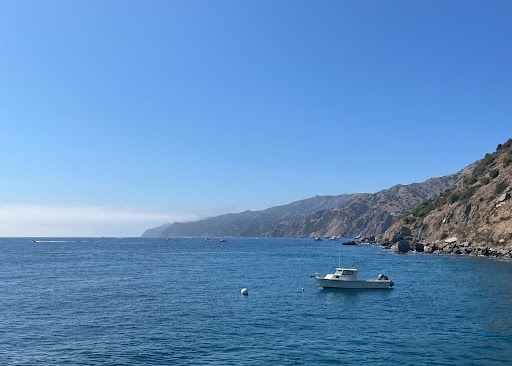
Consequently, the progressively poor conditions driven by ocean acidification have disrupted fishing and marine life, even in our local Southern California waters. “Every year I go with my grandpa, my dad, and my brother off of a marina, and we go lobster fishing,” Madeleine Andre ’27 said as she described her annual trip to Catalina Island. Last year, however, her family tradition was interrupted due to the harsh effects of ocean acidification on the lobsters. Her family was able to gather this year, but she is concerned for future outings.

“Understanding how lobsters will respond to ocean acidification now will help commercial fishers and managers prepare for the future,” the Virginia Institute of Marine Science warns in their study regarding lobsters and ocean acidification. The declining ocean health poses a serious threat to the future stability of the lobster industry, as many stress factors impact not only the lobster shells but the embryos as well. Ocean acidification, combined with other conditions such as increased temperature place environmental strain on the lobsters. “The more stressed out the lobster is, the more energy they need just to stay alive and maintain their metabolism. That means a stressed lobster has less energy available to use for growth.” These issues coming into action at an early stage of development will spark growth and health problems in lobsters for generations, exemplifying the extent to which ocean acidification is harming organisms.
The main culprit of ocean acidification is, unsurprisingly, the ever-increasing carbon dioxide levels emitted as a result of human activities. This connection becomes clearer as the National Oceanic and Atmospheric Administration (NOAA) explains in their study that, “As levels of atmospheric CO2 increase from human activity such as burning fossil fuels (e.g., car emissions) and changing land use (e.g., deforestation), the amount of carbon dioxide absorbed by the ocean also increases.” The burning of fossil fuels when powering vehicles or the use of power plants produce high amounts of carbon dioxide, acting as a primary contributor to ocean acidification. Moreover, anthropogenic deforestation demolishes the population and diversity of carbon-absorbing vegetation, leaving more carbon dioxide floating around in the atmosphere to be ultimately soaked up by the ocean. In addition to the large-scale impacts, pollution from agricultural chemicals can also contribute to acidification. When water from farms flows into the ocean, remnants of pesticides and fertilizers are disseminated throughout the ocean, acting as toxic pollutants. Other products, such as gasoline and heavy metals, can contaminate the oceans and act as damaging stressors.
Coral reefs are extremely important to marine life, as they provide shelter, breeding grounds, and security. “Without the existence of reefs due to coral bleaching, there is a major deadly chain reaction for marine animals as the coral is at the base of ocean food chains, ” Seaside Sustainability—an organization that strives to aid in the mitigation of climate change— brings forward in their article. Many organisms at the bottom of ocean food chains rely on coral reefs for safety and sustainability. When these sea creatures are deprived of a home, they become exceedingly vulnerable to predators. This can potentially trigger a “ripple effect,” as defined by Seaside Sustainability. This means that food chains could be severely affected, which could begin a biodiversity crisis.
Reversing ocean acidification requires human intervention to help mitigate the negative effects. Evidently, carbon emissions must be reduced for this advancement. In order to progress towards this solution, it is necessary to transition towards renewable energy sources such as wind and solar power, and processes like reforestation that create carbon sinks.
Implementing strong policies or agreements are some of the most effective ways to reduce carbon emissions. For instance, we are seeing local efforts to support this cause with the California Ocean Acidification Action Plan, which “articulates a 10-year vision for addressing ocean acidification and a series of pragmatic actions to work towards that vision.” The plan is organized around six strategies, each acting as a key component for the ‘roadmap’ that this builds. Some of these pivotal actions include managing coastal ecosystems to store carbon and supporting the resilience of ecosystems to protect them. On top of that, the final strategy focuses on coordinating collaborative efforts to combat ocean acidification not just regionally, but also internationally, owing to the fact that this is a global issue.
Our oceans are changing rapidly, unfortunately, not for the better. Once bright coral reefs filled with life and color are now fading into silence. Ocean acidification has revealed its destructive power, yet it’s not too late to make a difference. It is important to recognize that this event doesn’t just affect distant waters; rather, it directly impacts us. Stories like Madeleine’s family tradition remind us that these negative impacts are happening in our own communities. By cutting back on carbon emissions and making sustainable choices in our daily lives, we can help protect marine ecosystems.
“The ocean is doing its job, which is absorbing that CO2,” Mayfield Senior School Biology teacher, Theresa Peters, stated. “And when the ocean does that, the simple fact is that it causes ocean acidification.” Peters shared her concern that until people are directly impacted, the effects of ocean acidification may not be curtailed. “We are a coastal state,” Peters said. “I think all of us need to continue making the choices that we are to be stewards of our environment.” If humans make an effort to resolve the effects of ocean acidification, coral reefs and marine life around the world will be saved from a dull future.